Module 01
Discovery and scoping
We map the current process, interview the people running it, and write down what the system must do before anyone estimates a timeline.
Custom Software Development
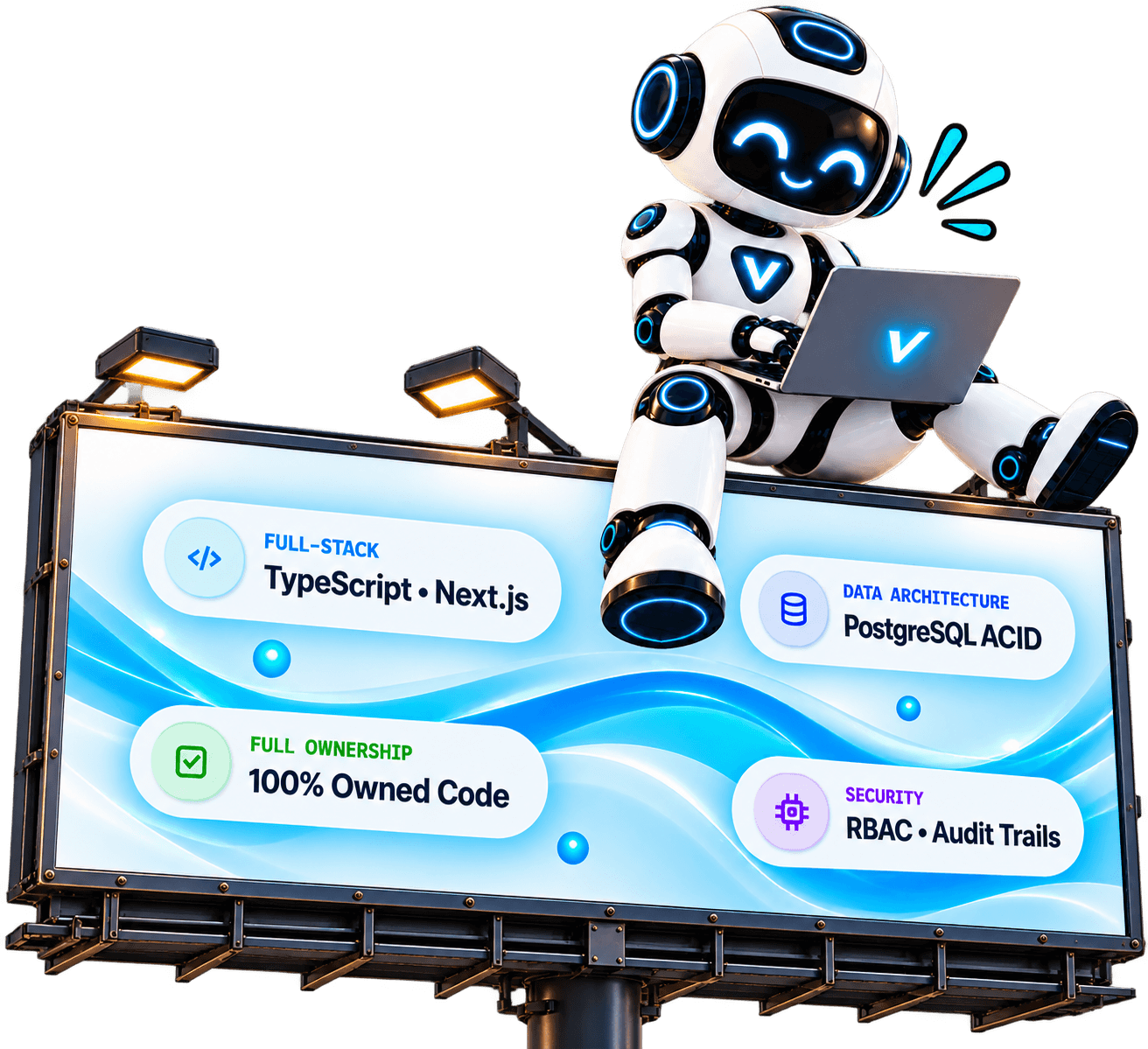
Off the shelf tools cover the common cases and leave the rest to spreadsheets, WhatsApp threads and one person who remembers how it works. Custom software is for the part nobody else has built.
Most businesses do not need custom software for everything. They need it for the one or two processes that make them different, where a generic product forces the team to work backwards. That might be how you quote a job, track production, or settle payments with partners.
We begin by sitting with the people who will use the system. What they do in a day, what they copy between screens, what they fix manually at month end. That detail decides the data model, and the data model decides whether the software still fits in three years.
Delivery happens in working increments. You use part of the system while the rest is being built, which surfaces the assumptions that were wrong early enough to correct. We would rather change direction in week three than hand over something complete and unused.
Records live in one system instead of several spreadsheets, so two people quoting the same job see the same numbers.
Every approval, edit and status change is logged, so questions about who did what have an answer.
Rules that lived with one experienced employee are written into the system, so the operation survives leave and resignations.
The code, the database and the documentation are yours, with no per seat licence rising every year you grow.
The work we take responsibility for, written plainly so there is no argument later about what was in scope.
Module 01
We map the current process, interview the people running it, and write down what the system must do before anyone estimates a timeline.
Module 02
How records relate, which rules the database itself must enforce, and where the system will strain under volume. Decided early, because these choices are expensive to reverse.
Module 03
Browser based systems for quoting, scheduling, inventory, field reporting, approvals or whatever the operation runs on, usable on a laptop and a phone.
Module 04
Different people see different things. We define roles early so finance, operations and field staff each get a screen that matches their job and their authority.
Module 05
Automated checks on the logic that handles money, stock and approvals, plus structured testing with your own team on real records before anything goes live.
Module 06
Hosting, backups, monitoring and a named route for reporting problems. We also document the system so a future developer can pick it up.
The same five steps run through every engagement. Working software shipped in early slices, not giant mystery handovers.
UNDERSTAND
We follow a live job through your existing system, including the spreadsheets and messages outside it. The gaps we find there become the requirements.
STRATEGIZE
We separate what you need in version one from what can wait. Then we choose a technology stack your future team can hire for.
BUILD
Every few weeks you get a part of the system your team can open and use. Working screens tell us whether we understood you far better than a status report does.
OPTIMIZE
Once people are working in the system we look at slow screens, abandoned steps and support questions, then simplify the places causing them.
SCALE
New modules, more users and additional branches are planned for in the architecture, so growth means adding to the system rather than replacing it.
Information entered once and reaching every system that needs it, with approvals that move instead of sitting in an inbox.
Learn moreA pipeline your sales team actually updates, so every enquiry has an owner and a next follow-up date.
Learn moreApps for iOS and Android that people keep on their phone, with a release process that does not stall.
Learn moreWalk us through the tools and steps you use today. We will point out what is worth keeping, what to replace, and a sensible order to do it in.